ServicesYard Debris Removal
Yard Debris Removal in Plumas Lake
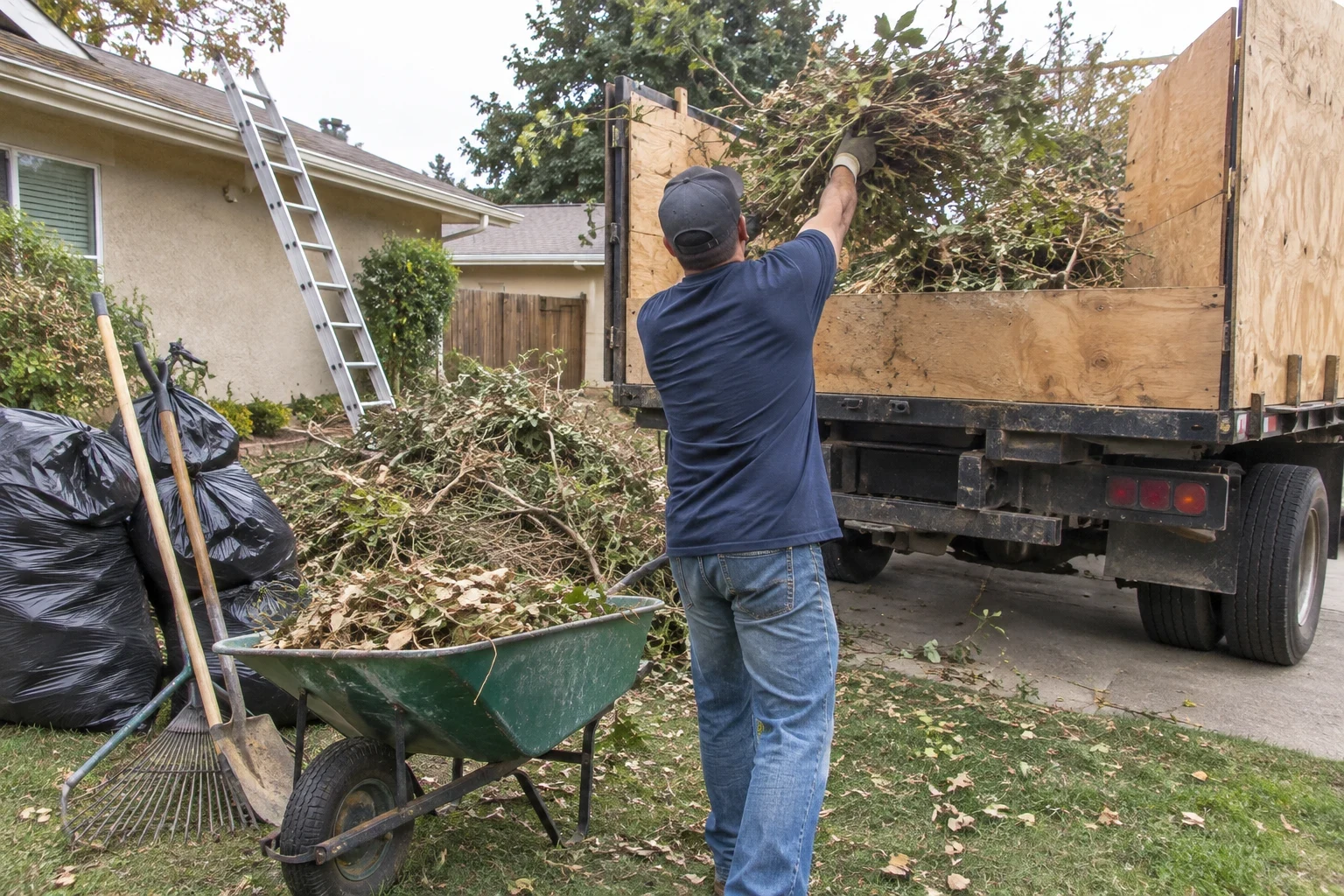
We clear the brush piles, pruned limbs, pulled sod and storm litter that will not fit in your green bin. Our crew loads by hand, keeps the work to the path we agree on, and rakes and sweeps before we pull away.
When a pile outgrows the green bin
A curbside green-waste cart fills after one good pruning session, and it will not take limbs much thicker than a wrist, root balls with soil attached or long runs of rolled sod. After a big pruning day, a fence-line trim or a winter windstorm, the pile in your side yard can sit for weeks. Dry clippings and dead brush become a fire concern in a Sacramento Valley summer, and damp piles against a fence or siding hold moisture and draw rodents and termites.
Yard debris removal is the right call when the volume or the material is beyond what curbside pickup handles, or when you want it gone in one visit. We handle the loading, the hauling and the cleanup. Because yard work tracks dirt and leaf litter everywhere, we treat raking and sweeping as part of the job, not an extra.
What we haul and how we handle it
Branches and cut limbs
Pruned limbs, fallen branches and trunk sections cut to a liftable size. We carry them rather than drag them, so bark does not gouge your lawn or scrape fence posts on the way out.
Brush, leaves and clippings
Loose material goes into tarps and bags before it reaches the truck. That keeps leaves and seed heads off your driveway and out of the street gutter.
Sod, soil and root balls
Pulled lawn, planter soil and shrub roots are heavy for their size, so we load them over the axle of the truck and track the weight as we go.
Old landscape materials
Rotted edging boards, broken pavers, worn landscape fabric and bark that has gone to dust. We separate them from pure green waste so each load can go where it is accepted.
Wind and storm litter
After wind or heavy rain, we clear downed limbs and blown-in litter from the yard, patio and side yards.
Rake, sweep and blow-off
When the last load is out, we rake the work area, sweep hard surfaces and blow off walkways and the driveway apron.
Signs your yard debris needs to go
Dry brush near the house
Dead clippings and brush dry out fast in July and August. A pile against siding, a fence or under eaves gives an ember something to catch.
Piles against wood fences
Wet leaves and grass hold moisture against fence boards and posts. That speeds rot at the base, where the post meets the soil.
Rodent and insect activity
Brush piles are shelter for rats, mice and black widows. If you see droppings, burrows or webs in the pile, it has been there too long.
Dead patches under the pile
Debris left on turf blocks light and water. The grass under it yellows within a couple of weeks and may need reseeding.
Bins full for months ahead
If you are rationing the green cart week after week, one haul clears the backlog so the cart can handle regular upkeep.
How a yard debris job runs
- 1
Estimate by phone
You describe the pile, what it is made of and where it sits. We give you a free, no-obligation estimate and upfront pricing, with no surprises when the crew arrives.
- 2
Walk the path first
On arrival we confirm the load and pick the carry route. We note sprinkler heads, low branches, gate latches and soft lawn so nothing gets stepped on or snapped.
- 3
Protect, then load
Tarps go down on the driveway and any walkway we cross. Heavy soil and sod go in first, then limbs, then loose brush packed on top so nothing blows out on the road.
- 4
Leave the yard tidy
We rake the spot where the pile stood, sweep the hardscape and blow off the drive. You walk the yard with us before we leave.
What moves the price of yard debris removal
Two things set the number: how much of the truck your debris fills and how much effort it takes to carry it there. We price the job during the phone call, so the figure is settled before the crew starts. If the pile on site differs from what was described, we say so before loading anything.
- Volume
- Loose brush takes up a lot of room for its weight. Cutting limbs into shorter lengths before we arrive can let more fit per load.
- Weight and material
- Soil, sod, rock and wet green waste are dense. A small pile of dirt can weigh more than a large pile of leaves and costs more to dispose of.
- Carry distance and access
- A pile by the driveway loads fast. Debris in a fenced backyard behind a narrow side gate means more trips by hand.
- Mixed loads
- Green waste mixed with lumber, plastic pots or fabric has to be sorted, since straight green waste and mixed debris go to different places.
Yard debris removal questions
Something not covered here? (530) 464-1866
Do I need to bag or bundle everything first?
No. We bring tarps and bags and load it as it lies. If you are still working, stacking limbs in one direction and keeping soil in its own pile does help the loading go faster.
Can you take soil, rock and old sod?
Yes. Tell us roughly how much when you get your quote by phone, because weight affects the truck and disposal. We load heavy material by hand and shovel, never by dragging it across your lawn.
Do you cut down trees?
We do not fell standing trees. We haul limbs, trunk rounds and brush that are already down or cut. If a tree service leaves the wood behind, we can clear it.
Will the truck damage my driveway or lawn?
The truck stays on the street or the driveway, never on the lawn. We lay tarps on hard surfaces where debris crosses, which keeps sap, mud and leaf stain off the concrete.
What if you miss something?
Our clean-space guarantee covers it. We sweep up before we leave, and if anything was missed, we come back and take care of it free.
Do you work in nearby towns?
Yes. Along with Plumas Lake, we handle yard debris in Olivehurst, Wheatland, Linda, Marysville, Yuba City and the surrounding area.
Get the pile out of your yard
Describe what is in the pile and where it sits, and you will have an upfront price before anyone picks up a rake. For bigger mixed jobs, ask about our junk removal and hauling services too.