ServicesConstruction Debris
Construction Debris Removal in Plumas Lake
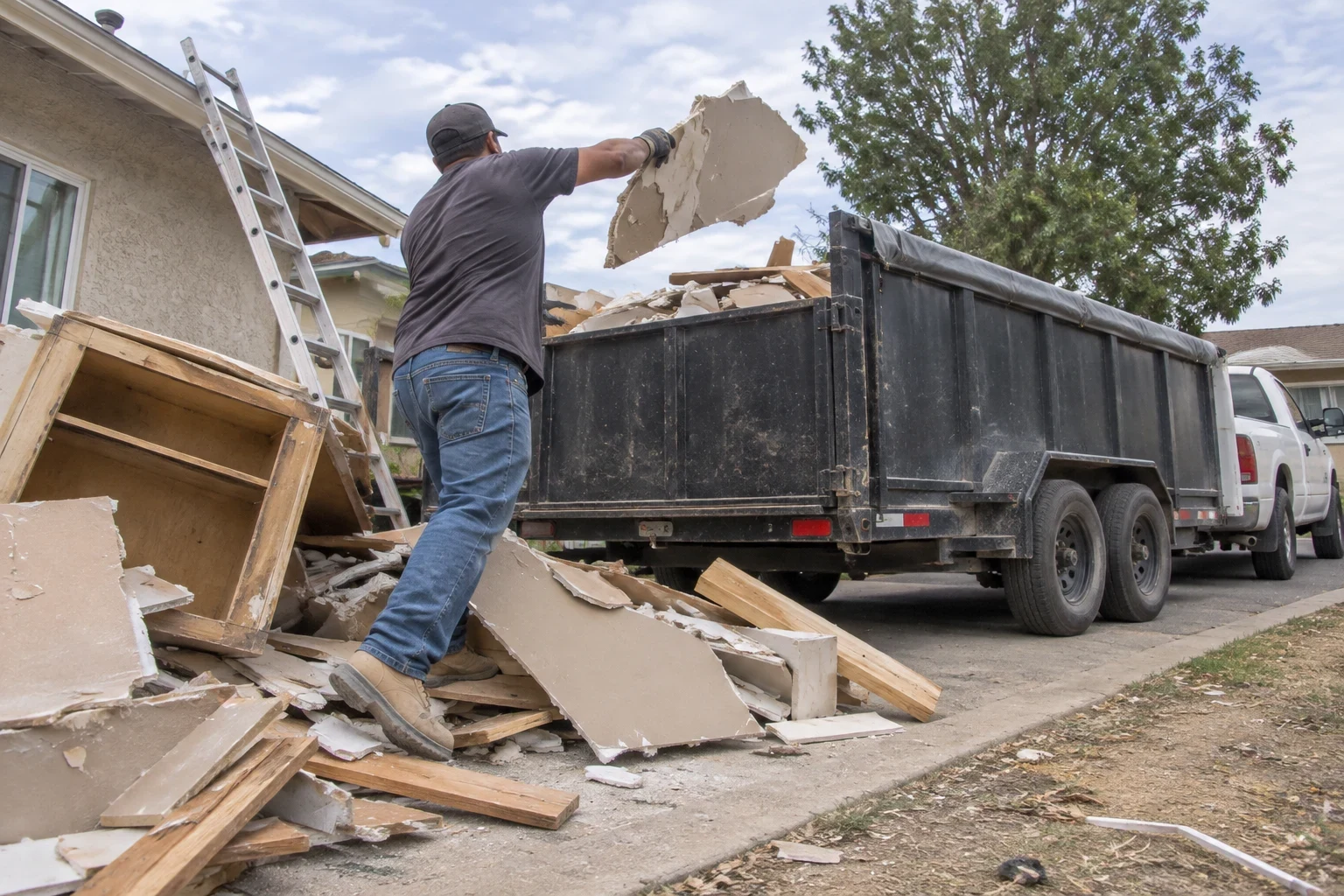
Tear-out leaves more than a heap of material. There's gypsum dust on the concrete, screws in the gravel and broken tile by the side gate. We load the drywall, lumber and old cabinets, haul them off, then sweep and magnet the ground so nothing sharp stays at your home.
What Construction Debris Removal Covers
Construction debris is what's left after a remodel, repair or DIY project: demolished drywall, plaster, framing lumber, flooring, tile, roofing scraps, old fixtures and the cardboard and packaging new materials arrive in. It is heavy and sharp. It is also a poor fit for curbside bins, which most waste haulers won't take loaded with building material.
We bring the truck and the crew, carry everything out by hand, and clean up the spot where the pile sat. That last part matters most on construction jobs. Drywall screws, nails pulled from trim and shards of tile scatter into gravel and lawn edges, then end up in a tire or a bare foot weeks later. We rake, sweep and use a magnet sweeper where nails are likely, so the area is tidier than when we arrived.
This is the right call when the work is finished, or at a stage where the mess is in your way, and you'd rather not rent a dumpster that sits on your driveway for a week. If a structure still needs to come down first, our light demolition service handles the tear-out before the haul.
What's Included on a Debris Pickup
Hand loading from wherever it sits
Garage, side yard, backyard or the bedroom you just gutted. We carry it out ourselves, so you don't have to stage the pile at the curb.
Floor and path protection
When we walk debris through your home, we lay drop cloths or runners over the floor along the route. Broken tile and drywall corners gouge flooring and scuff door jambs, and a covered path prevents that.
Sorting by material
Bare scrap metal, untreated wood and cardboard are separated where local facilities accept them. Mixed debris goes to a transfer station that takes construction waste.
Nail and grit sweep
After the last load, we sweep the driveway, rake gravel and run a magnet over areas where fasteners fell. Gypsum dust from drywall gets swept or blown off concrete before it can track inside.
Our clean-space guarantee
We sweep up when the job is done. If we missed anything, we come back and get it at no charge.
When Remodel Leftovers Need to Go
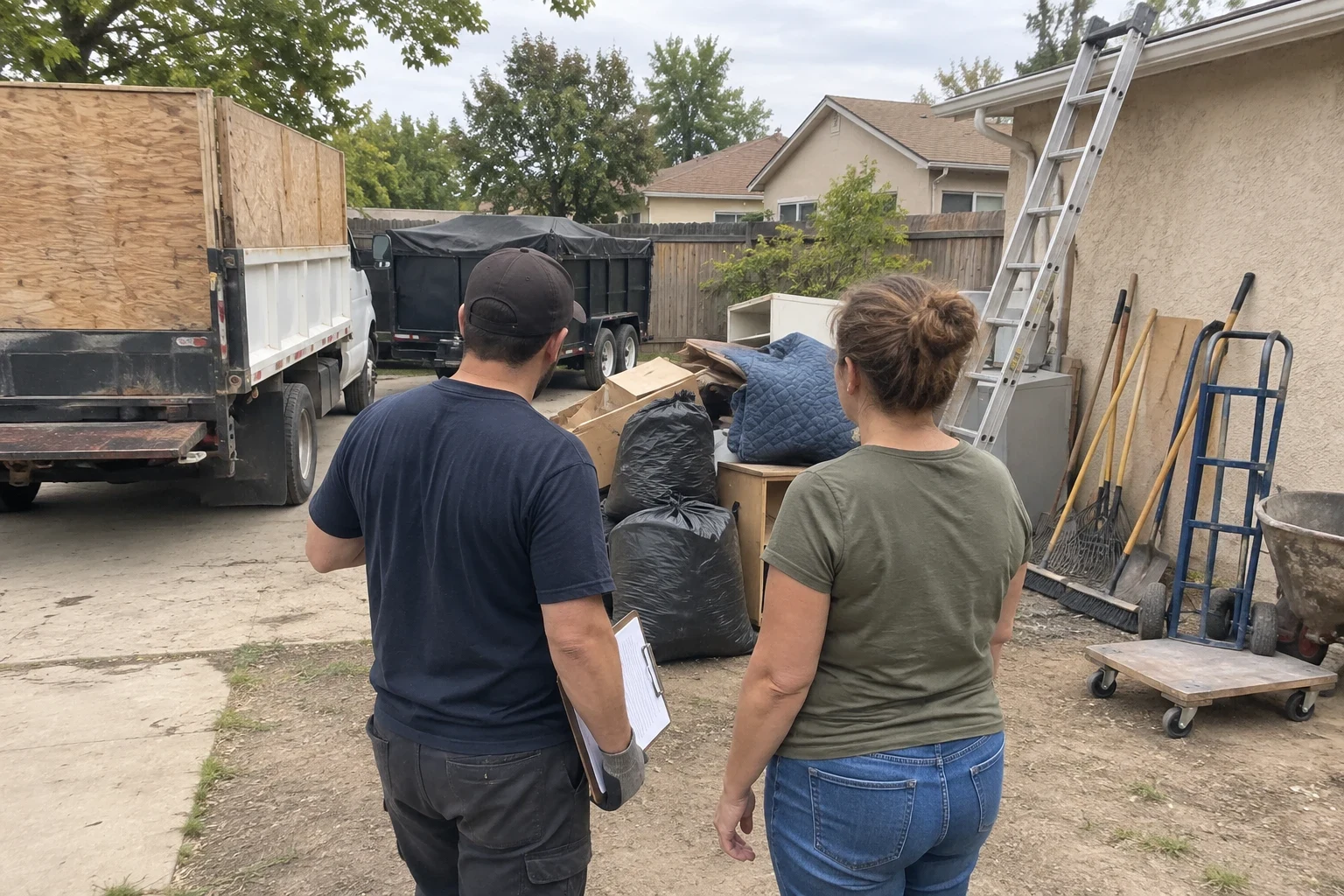
- Debris has taken over the parking spot
- Tear-out usually gets dropped wherever is easiest, and that's often the garage bay or the driveway. Leave it a few days and you start parking around it.
- Exposed nails and screws
- Demolished trim, framing and drywall carry fasteners pointing every direction. That's a real puncture hazard for kids, pets and tires.
- Wet drywall or wood
- Gypsum board soaks up water and turns heavy and soft, and wet lumber can start to mold. In summer, dry drywall crumbles and spreads fine white dust instead.
- Your contractor left the haul-off to you
- Many remodel bids include tear-out but not disposal. If the crew is gone and the pile stayed, that's exactly the job we take.
- The next stage of the project can't start
- Flooring installers, painters and inspectors need a clear workspace. Debris in the way pushes the schedule back.
How a Debris Pickup Day Runs
- 1
Estimate by phone
Tell us what the material is, roughly how much, and where it sits. Photos or a quick look in person help us give you an upfront price before anything is loaded.
- 2
Protect the route
On arrival, we walk the path from the pile to the truck, then cover floors and doorways where we'll be carrying debris through your home.
- 3
Load and separate
Heavy items like concrete and tile go in first and low in the truck to keep the load balanced. Metal, untreated wood and cardboard are set aside as we go.
- 4
Sweep and check
We go over the area with brooms, rakes and a magnet sweeper, then walk it with you so you can see it's clear before we leave.
What Affects the Price
Construction debris is priced mostly by the share of the truck it fills. Density counts for more here than with everyday household clutter, because dense loads cost more to drop at the transfer station. You hear the price before anything goes on the truck, and that number doesn't change at the end.
- Volume
- How much of the truck the debris fills is the biggest factor. A bathroom gut and a whole kitchen remodel are very different loads.
- Material weight
- Concrete, brick, tile with mortar and wet drywall are far heavier per load than lumber or cabinets. Dense material costs more to dispose of at the transfer station.
- Access and carry distance
- A pile at the driveway edge loads fast. Debris in an upstairs room or a backyard behind a narrow side gate takes more time and more trips.
- Mixed or sorted loads
- Debris that's already separated, or one uniform material, is quicker to handle. A tangled pile of drywall, wire and broken glass takes longer to sort safely.
Construction Debris Questions
- What kinds of construction debris do you take?
- Drywall, plaster and lath, lumber, plywood, flooring, carpet and pad, tile, cabinets, countertops, old fixtures, doors, windows, roofing scraps, concrete and brick in manageable amounts, plus packaging and cardboard. Describe the pile when you phone us and we'll confirm.
- Is there anything you can't haul?
- Liquid paint, solvents, adhesives and similar chemicals follow separate disposal rules, as does any material you suspect contains asbestos, such as old popcorn ceiling or certain vinyl tiles. Mention these on the phone and we'll tell you plainly what we can and can't take.
- Do I need to bag or stack the debris first?
- No. We load it as it sits. If you'd like to save time, keeping nails and broken glass in one spot helps, but it isn't required.
- Will you damage my driveway or floors?
- We carry heavy material rather than dragging it, lay covers along indoor routes, and set sharp pieces down instead of dropping them. On concrete driveways we avoid sliding tile and block across the surface.
- Can you pick up partway through a remodel?
- Yes. Some homeowners book us after demolition and again at the end. Clearing the tear-out early gives the rest of the work a clear space and keeps dust from spreading through the house.
Get the Remodel Pile Gone
Tell us what's left from the project and where it sits. You'll get an upfront price, and if we miss anything during the final sweep, we'll come back for it free.